
When designing a new quilt, the first element of design that I consider is colour. Colour, even more then design, determines the mood and energy of a piece. My vibrant, bright colour selections for this quilt symbolize the joy and delight that a new baby brings into a family unit.
 To achieve this, I chose to work with the primary colours (magenta, yellow, turquoise) and the secondary colours (orange, violet, green) from the Ives Colour Wheel. Bursts of these electric colours on a crisp, fresh, white canvas will best convey the joy and excitement that I would like the quilt to portray.
 These were my initial focus fabrics. Three of them did not make the final cut, but they did provide a guideline for the eventual choices.
 The process of interviewing the candidates.It's always great fun to go through the stash and play with all of the colours.
 Using the primary and secondary colours of the Ives Colour Wheel, the final selection was made.
 To achieve this, I chose to work with the primary colours (magenta, yellow, turquoise) and the secondary colours (orange, violet, green) from the Ives Colour Wheel. Bursts of these electric colours on a crisp, fresh, white canvas will best convey the joy and excitement that I would like the quilt to portray.
 These were my initial focus fabrics. Three of them did not make the final cut, but they did provide a guideline for the eventual choices.
 The process of interviewing the candidates.It's always great fun to go through the stash and play with all of the colours.
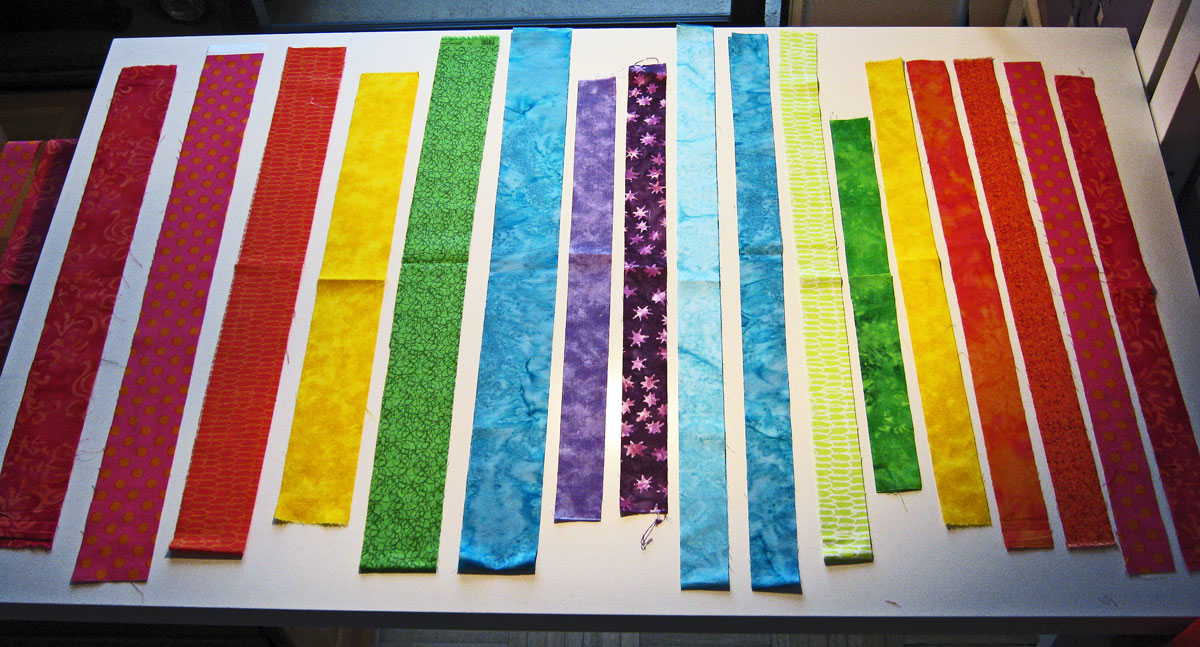 Using the primary and secondary colours of the Ives Colour Wheel, the final selection was made.
Comments
Post a Comment