
When a shirt (or any item of clothing) becomes an all time favourite,
it is worn beyond threadbare to such an impressive point that there are not even enough threads to mend. Replacing it wasn't an option, because the store where said shirt was purchased some 15 - 20 years ago had long since closed. What to do?

While evaluating the options, I came across an almost identically coloured cotton in my stash, so maybe mending would be possible.
The thought of unpicking all of the seams was extremely uninspiring, (understatement of the year), but the more I thought about the problem, the more of a challenge it became. So unpick is what I did. (The things we do for love)
Once the daunting, dreaded task of unpicking was done, I used these pieces to draft new pattern pieces for the parts to be replaced. Taking another look at the shirt to be mended, I decided that even though the worst worn bits were to be replaced, the rest of the shirt was not in a condition where it would withstand a lot more wear and tear, so why apply the new to the old only to have it shred again after a few washings. At this point, a full remake was the only practical option, so it became a personal challenge.
Trying to stay as true as possible to the construction of the original shirt, (to keep sizing accurate), I tried duplicating it's construction techniques. The unpicked seams, hems, facings, etc. were a constant reference.
There were no exposed seams on the original shirt; all were neatly enclosed.
In the end, the task wasn't as monumental as I had feared and I may yet try to mend the old shirt if I ever run out of projects more interesting, but what are the chances of that?
it is worn beyond threadbare to such an impressive point that there are not even enough threads to mend. Replacing it wasn't an option, because the store where said shirt was purchased some 15 - 20 years ago had long since closed. What to do?

While evaluating the options, I came across an almost identically coloured cotton in my stash, so maybe mending would be possible.
 |
| The stash match: The shade is slightly off, but very close. |
The thought of unpicking all of the seams was extremely uninspiring, (understatement of the year), but the more I thought about the problem, the more of a challenge it became. So unpick is what I did. (The things we do for love)
 |
| Reams of Seams (unpicked!) |
Once the daunting, dreaded task of unpicking was done, I used these pieces to draft new pattern pieces for the parts to be replaced. Taking another look at the shirt to be mended, I decided that even though the worst worn bits were to be replaced, the rest of the shirt was not in a condition where it would withstand a lot more wear and tear, so why apply the new to the old only to have it shred again after a few washings. At this point, a full remake was the only practical option, so it became a personal challenge.
 |
| Newly drafted pattern pieces. |
Trying to stay as true as possible to the construction of the original shirt, (to keep sizing accurate), I tried duplicating it's construction techniques. The unpicked seams, hems, facings, etc. were a constant reference.
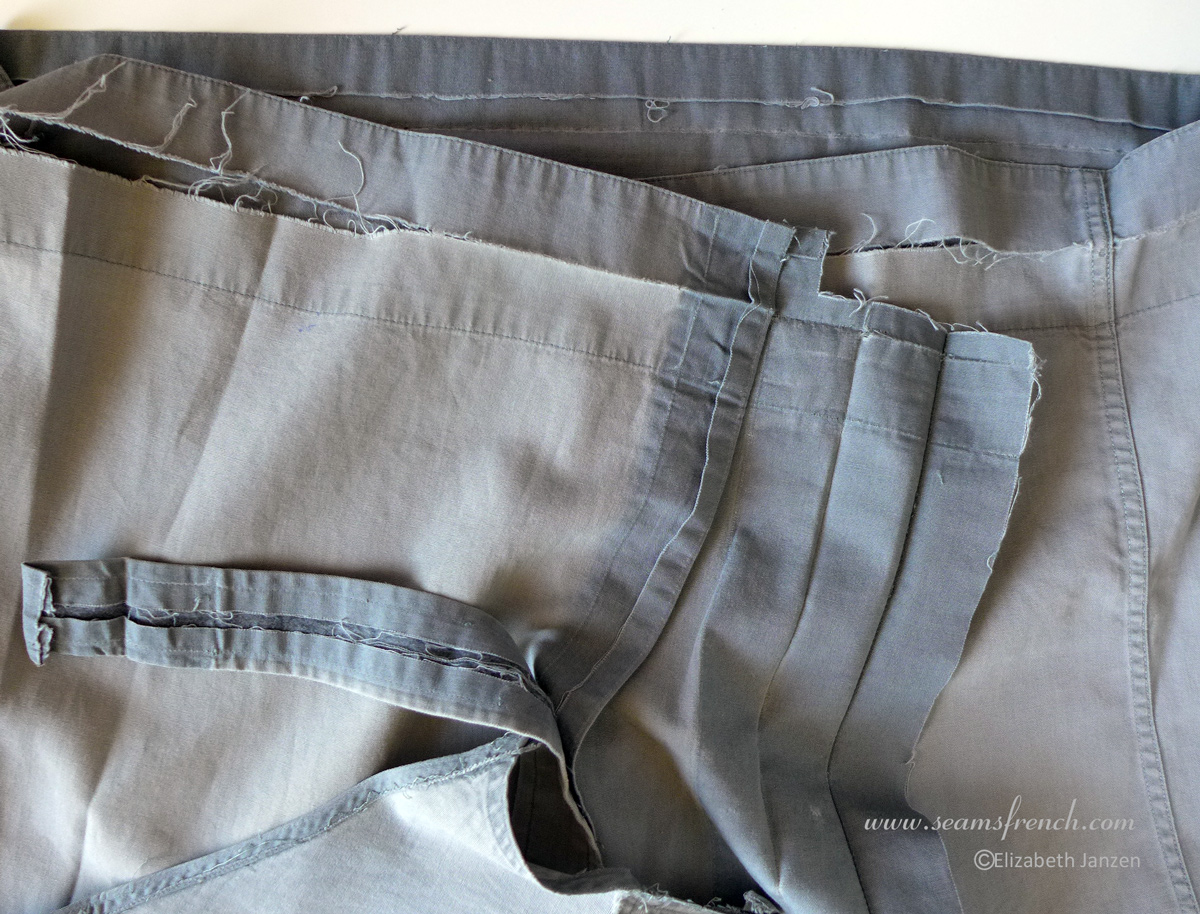 |
| Construction details. |
There were no exposed seams on the original shirt; all were neatly enclosed.
 |
| Other than where the sleeve attaches to the shoulder, all seams and joins on the remake were also enclosed. |
 |
| Seams French makes a French Seam. |
 |
| The new shirt on it's very happy recipient. |
In the end, the task wasn't as monumental as I had feared and I may yet try to mend the old shirt if I ever run out of projects more interesting, but what are the chances of that?
Comments
Post a Comment